Diagnosis is based on clinical signs and symptoms. There are no unique laboratory diagnostic tests for the disease. The principal signs were recognised and reported in 1974, and these criteria have been updated by the American Heart Association (AHA) and endorsed by the American Academy of Pediatrics.[1]McCrindle BW, Rowley AH, Newburger JW, et al; American Heart Association. Diagnosis, treatment, and long-term management of Kawasaki disease: a scientific statement for health professionals from the American Heart Association. Circulation. 2017 Apr 25;135(17):e927-99.
https://www.ahajournals.org/doi/full/10.1161/cir.0000000000000484
http://www.ncbi.nlm.nih.gov/pubmed/28356445?tool=bestpractice.com
[28]Jone PN, Tremoulet A, Choueiter N, et al. Update on diagnosis and management of Kawasaki disease: a scientific statement from the American Heart Association. Circulation. 2024 Dec 3;150(23):e481-500.
https://www.ahajournals.org/doi/10.1161/CIR.0000000000001295
http://www.ncbi.nlm.nih.gov/pubmed/39534969?tool=bestpractice.com
[30]Kawasaki T, Kosaki T, Okawa S, et al. A new infantile acute febrile mucocutaneous lymph node syndrome (MLNS) prevailing in Japan. Pediatrics. 1974 Sep;54(3):271-6.
http://www.ncbi.nlm.nih.gov/pubmed/4153258?tool=bestpractice.com
The Single Hub and Access point for paediatric Rheumatology in Europe (SHARE) guidelines recommend considering the diagnosis of Kawasaki disease (KD) in any child with a febrile, exanthematous illness, with systemic inflammation, especially if fever persists for longer than 4 days.[31]Kuemmerle-Deschner JB, Hansmann S, Wulffraat NM, et al. Recommendations for collaborative paediatric research including biobanking in Europe: a Single Hub and Access point for paediatric Rheumatology in Europe (SHARE) initiative. Ann Rheum Dis. 2018 Mar;77(3):319-327.
http://www.ncbi.nlm.nih.gov/pubmed/29021237?tool=bestpractice.com
Prompt diagnosis is key, as treatment within 10 days of fever onset significantly reduces the risk of developing coronary artery dilation or anureysm.[28]Jone PN, Tremoulet A, Choueiter N, et al. Update on diagnosis and management of Kawasaki disease: a scientific statement from the American Heart Association. Circulation. 2024 Dec 3;150(23):e481-500.
https://www.ahajournals.org/doi/10.1161/CIR.0000000000001295
http://www.ncbi.nlm.nih.gov/pubmed/39534969?tool=bestpractice.com
[32]Gorelik M, Chung SA, Ardalan K, et al. 2021 American College of Rheumatology/Vasculitis Foundation guideline for the management of Kawasaki disease. Arthritis Care Res (Hoboken). 2022 Apr;74(4):538-48.
http://www.ncbi.nlm.nih.gov/pubmed/35257507?tool=bestpractice.com
The AHA states that KD should ideally be diagnosed within 4-5 days of illness for patients with complete KD, and as soon as possible within 10 days of fever onset for patients with suspected incomplete KD.[28]Jone PN, Tremoulet A, Choueiter N, et al. Update on diagnosis and management of Kawasaki disease: a scientific statement from the American Heart Association. Circulation. 2024 Dec 3;150(23):e481-500.
https://www.ahajournals.org/doi/10.1161/CIR.0000000000001295
http://www.ncbi.nlm.nih.gov/pubmed/39534969?tool=bestpractice.com
Acute stage
The acute stage generally lasts 7-11 days.
In addition to fever, patients must have at least four of the following five signs and symptoms:
Polymorphous erythematous rash
Non-purulent bilateral conjunctival injection (occurs in 90%)
Oropharyngeal changes, including diffuse hyperaemia, strawberry tongue, and lip changes (e.g., swelling, fissuring, erythema, and bleeding)
Peripheral extremity changes, including erythema, oedema, induration, and desquamation, which may cause difficulty walking
Non-purulent cervical lymphadenopathy. This occurs in 40% of cases (although other reports are 50% to 75%) and is generally a single, enlarged, non-suppurative cervical node measuring approximately ≥1.5 cm.
These criteria are only guidelines in order to prevent misdiagnosis or over-diagnosis. According to these guidelines, a diagnosis can be made on day 4 of the fever if four principal criteria are met, especially when redness and swelling of the hands and feet are present. Experienced clinicians who have treated many KD patients may establish diagnosis on day 3 of the fever in the presence of a classic clinical presentation.[1]McCrindle BW, Rowley AH, Newburger JW, et al; American Heart Association. Diagnosis, treatment, and long-term management of Kawasaki disease: a scientific statement for health professionals from the American Heart Association. Circulation. 2017 Apr 25;135(17):e927-99.
https://www.ahajournals.org/doi/full/10.1161/cir.0000000000000484
http://www.ncbi.nlm.nih.gov/pubmed/28356445?tool=bestpractice.com
[28]Jone PN, Tremoulet A, Choueiter N, et al. Update on diagnosis and management of Kawasaki disease: a scientific statement from the American Heart Association. Circulation. 2024 Dec 3;150(23):e481-500.
https://www.ahajournals.org/doi/10.1161/CIR.0000000000001295
http://www.ncbi.nlm.nih.gov/pubmed/39534969?tool=bestpractice.com
The fever must be high; usually greater than 39°C (102°F), but is often over 39.9°C (104°F). Patients are often irritable beyond that expected for the extent of fever.
The European SHARE recommends that a diagnosis can be reached before 5 days of fever if four principal criteria are met or if there is evidence of coronary artery dilation (Z score >2 but <2.5) or aneurysm (Z score ≥2.5) or if there is evidence of persistent inflammation, with no alternative diagnosis, and a clinical suspicion of KD.[13]de Graeff N, Groot N, Ozen S, et al. European consensus-based recommendations for the diagnosis and treatment of Kawasaki disease - the SHARE initiative. Rheumatology (Oxford). 2019 Apr 1;58(4):672-82.
https://academic.oup.com/rheumatology/article/58/4/672/5233868?login=false
http://www.ncbi.nlm.nih.gov/pubmed/30535127?tool=bestpractice.com
The diagnosis of incomplete KD can be made according to the AHA guidelines in a child with prolonged unexplained fever and two or three clinical criteria, or in infants with ≥7 days of fever without alternative diagnosis, in conjunction with compatible laboratory or echocardiographic findings.[28]Jone PN, Tremoulet A, Choueiter N, et al. Update on diagnosis and management of Kawasaki disease: a scientific statement from the American Heart Association. Circulation. 2024 Dec 3;150(23):e481-500.
https://www.ahajournals.org/doi/10.1161/CIR.0000000000001295
http://www.ncbi.nlm.nih.gov/pubmed/39534969?tool=bestpractice.com
The SHARE guidelines highlight that this is a pragmatic approach to this situation but lacks an evidence base and studies validating criteria for incomplete KD is an important research priority.[13]de Graeff N, Groot N, Ozen S, et al. European consensus-based recommendations for the diagnosis and treatment of Kawasaki disease - the SHARE initiative. Rheumatology (Oxford). 2019 Apr 1;58(4):672-82.
https://academic.oup.com/rheumatology/article/58/4/672/5233868?login=false
http://www.ncbi.nlm.nih.gov/pubmed/30535127?tool=bestpractice.com
Echocardiography in this scenario showing coronary vasculitis would confirm the diagnosis, but a normal echocardiogram does not exclude the diagnosis. Moreover, incomplete KD occurs most commonly in infants who are at risk of developing coronary artery abnormalities and who may have prolonged fever as the only clinical finding. In patients with suspected KD, the presence of irritability or erythema and/or induration at the site of previous BCG vaccination are signs that increase the likelihood of diagnosis.[13]de Graeff N, Groot N, Ozen S, et al. European consensus-based recommendations for the diagnosis and treatment of Kawasaki disease - the SHARE initiative. Rheumatology (Oxford). 2019 Apr 1;58(4):672-82.
https://academic.oup.com/rheumatology/article/58/4/672/5233868?login=false
http://www.ncbi.nlm.nih.gov/pubmed/30535127?tool=bestpractice.com
[Figure caption and citation for the preceding image starts]: SHARE recommendations for the management of suspected incomplete Kawasaki diseasede Graeff N, Groot N, Ozen S, et al. European consensus-based recommendations for the diagnosis and treatment of Kawasaki disease - the SHARE initiative. Rheumatology (Oxford). 2019;58(4):672-682. [Citation ends].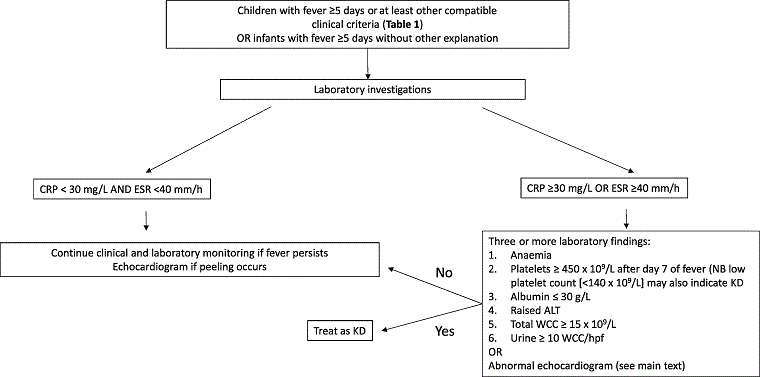
Echocardiography is considered positive for coronary abnormalities if any of the following conditions are met:[1]McCrindle BW, Rowley AH, Newburger JW, et al; American Heart Association. Diagnosis, treatment, and long-term management of Kawasaki disease: a scientific statement for health professionals from the American Heart Association. Circulation. 2017 Apr 25;135(17):e927-99.
https://www.ahajournals.org/doi/full/10.1161/cir.0000000000000484
http://www.ncbi.nlm.nih.gov/pubmed/28356445?tool=bestpractice.com
[28]Jone PN, Tremoulet A, Choueiter N, et al. Update on diagnosis and management of Kawasaki disease: a scientific statement from the American Heart Association. Circulation. 2024 Dec 3;150(23):e481-500.
https://www.ahajournals.org/doi/10.1161/CIR.0000000000001295
http://www.ncbi.nlm.nih.gov/pubmed/39534969?tool=bestpractice.com
Left anterior descending coronary artery or right coronary artery Z score ≥2.5
Coronary artery aneurysm seen
Three or more other suggestive features, including decreased left ventricular function, mitral regurgitation, pericardial effusion, or Z scores in left anterior descending coronary artery or right coronary artery of 2.0 to 2.5.
In addition, the presence of C-reactive protein (CRP) ≥3 mg/dL and/or erythrocyte sedimentation rate (ESR) ≥40 mm/hour, plus 3 or more of the following laboratory features, may increase the index of suspicion for KD:[28]Jone PN, Tremoulet A, Choueiter N, et al. Update on diagnosis and management of Kawasaki disease: a scientific statement from the American Heart Association. Circulation. 2024 Dec 3;150(23):e481-500.
https://www.ahajournals.org/doi/10.1161/CIR.0000000000001295
http://www.ncbi.nlm.nih.gov/pubmed/39534969?tool=bestpractice.com
anaemia
platelet count ≥450,000/mm³
albumin ≤3.0 g/dL
elevated alanine aminotransferase (ALT)
white blood cell (WBC) count ≥15,000/mm³
urine with ≥10 WBC/high power field.
In the absence of a pathognomonic diagnostic test, these criteria are pivotal in diagnosing a patient with KD.[28]Jone PN, Tremoulet A, Choueiter N, et al. Update on diagnosis and management of Kawasaki disease: a scientific statement from the American Heart Association. Circulation. 2024 Dec 3;150(23):e481-500.
https://www.ahajournals.org/doi/10.1161/CIR.0000000000001295
http://www.ncbi.nlm.nih.gov/pubmed/39534969?tool=bestpractice.com
Uncommon findings on physical examination in acute stage
Less common findings may include: stiff neck secondary to aseptic meningitis, facial palsy, anterior uveitis (70%), pleural effusion, pulmonary infiltrates, pericardial effusion with or without myocarditis, and congestive heart failure.
Other uncommon findings include abdominal pain, vomiting, pseudo-obstruction, diarrhoea, hepatitis, obstructive jaundice, gallbladder distension or hydrops of the gallbladder, pancreatitis, joint involvement (arthralgias or arthritis), meatitis, vulvitis, urethritis with sterile pyuria, proteinuria, nephritis, and acute renal failure. In addition, peripheral extremity gangrene, pustules, erythema multiforme-like lesions, perineal erythema (50% to 70%), macules, papules, measles-like rash, and scarlet fever-like erythema may be found.
Hoarseness related to oedema and erythema of the larynx may be seen. Prospective data have documented hoarseness in 11% to 30% of patients with KD; in these studies, hoarseness was more common in children aged <18 months.[33]Gámez-González LB, Ulloa-Gutierrez R, Murata C, et al. Kawasaki disease presenting with hoarseness: a multinational study of the REKAMLATINA network. Pediatr Int. 2021 Jun;63(6):643-8.
http://www.ncbi.nlm.nih.gov/pubmed/33099854?tool=bestpractice.com
[34]Leuin SC, Shanbhag S, Lago D, et al. Hoarseness as a presenting sign in children with Kawasaki disease. Pediatr Infect Dis J. 2013 Dec;32(12):1392-4.
https://pmc.ncbi.nlm.nih.gov/articles/PMC3887132
http://www.ncbi.nlm.nih.gov/pubmed/23811742?tool=bestpractice.com
Rarely, patients may present with Kawasaki shock syndrome, a severe form of KD characterised by vasodilatory shock, hypotension, and poor perfusion, with or without myocardial dysfunction.[28]Jone PN, Tremoulet A, Choueiter N, et al. Update on diagnosis and management of Kawasaki disease: a scientific statement from the American Heart Association. Circulation. 2024 Dec 3;150(23):e481-500.
https://www.ahajournals.org/doi/10.1161/CIR.0000000000001295
http://www.ncbi.nlm.nih.gov/pubmed/39534969?tool=bestpractice.com
[35]Kanegaye JT, Wilder MS, Molkara D, et al. Recognition of a Kawasaki disease shock syndrome. Pediatrics. 2009 May;123(5):e783-9.
https://pmc.ncbi.nlm.nih.gov/articles/PMC2848476
http://www.ncbi.nlm.nih.gov/pubmed/19403470?tool=bestpractice.com
Oral ulcerations, exudative pharyngitis, exudative or unilateral conjunctivitis, and vesicular rash are not characteristic of KD and may suggest an alternative diagnosis.[28]Jone PN, Tremoulet A, Choueiter N, et al. Update on diagnosis and management of Kawasaki disease: a scientific statement from the American Heart Association. Circulation. 2024 Dec 3;150(23):e481-500.
https://www.ahajournals.org/doi/10.1161/CIR.0000000000001295
http://www.ncbi.nlm.nih.gov/pubmed/39534969?tool=bestpractice.com
Subacute stage
This stage lasts between 2-3 weeks, during which the presenting signs and symptoms are in the process of resolving, including among others, the persistent irritability and reduced appetite. Conjunctival injection and cracking of the lips may persist in this phase.
Typical features during this phase of illness include peripheral periungual desquamation, improving acute phase biomarkers, development of thrombocytosis, coronary artery aneurysm development, and reduced temperature.
Convalescent/chronic stage
This stage lasts between 4 and 6 weeks; the key signs and symptoms have resolved and inflammatory markers normalised. However, in patients who have developed cardiac sequelae, coronary artery aneurysms can persist and worsen, and life-threatening complications can develop including thrombosis or myocardial infarction. 60% of small aneurysms will resolve.
Initial laboratory investigations
The European SHARE guidelines recommend the following lab tests that should be monitored in all patients: ESR, CRP, full blood count, liver function, serum albumin, serum sodium (for hyponatraemia associated with severe disease), renal function and urinalysis.[13]de Graeff N, Groot N, Ozen S, et al. European consensus-based recommendations for the diagnosis and treatment of Kawasaki disease - the SHARE initiative. Rheumatology (Oxford). 2019 Apr 1;58(4):672-82.
https://academic.oup.com/rheumatology/article/58/4/672/5233868?login=false
http://www.ncbi.nlm.nih.gov/pubmed/30535127?tool=bestpractice.com
Ferritin and fibrinogen should also be monitored if macrophage activation syndrome is suspected. Notably, ESR is not a particularly useful test after intravenous immunoglobulin (IVIG) treatment as it may become elevated due to binding of immunoglobin to red blood cells.[1]McCrindle BW, Rowley AH, Newburger JW, et al; American Heart Association. Diagnosis, treatment, and long-term management of Kawasaki disease: a scientific statement for health professionals from the American Heart Association. Circulation. 2017 Apr 25;135(17):e927-99.
https://www.ahajournals.org/doi/full/10.1161/cir.0000000000000484
http://www.ncbi.nlm.nih.gov/pubmed/28356445?tool=bestpractice.com
[13]de Graeff N, Groot N, Ozen S, et al. European consensus-based recommendations for the diagnosis and treatment of Kawasaki disease - the SHARE initiative. Rheumatology (Oxford). 2019 Apr 1;58(4):672-82.
https://academic.oup.com/rheumatology/article/58/4/672/5233868?login=false
http://www.ncbi.nlm.nih.gov/pubmed/30535127?tool=bestpractice.com
[28]Jone PN, Tremoulet A, Choueiter N, et al. Update on diagnosis and management of Kawasaki disease: a scientific statement from the American Heart Association. Circulation. 2024 Dec 3;150(23):e481-500.
https://www.ahajournals.org/doi/10.1161/CIR.0000000000001295
http://www.ncbi.nlm.nih.gov/pubmed/39534969?tool=bestpractice.com
During the acute stage, many acute-phase reactant markers such as ESR, CRP, and serum ferritin are significantly raised. These tests tend to return to normal levels at the end of the subacute phase towards the convalescent phase, with CRP returning to normal values more rapidly than ESR. If ESR and CRP were normal or very mildly raised (ESR <40 mm/hour and/or CRP <190 nm/L [<20 mg/L or<2 mg/dL]) at the onset of the acute stage, this would be atypical of KD and alternative diagnoses should be considered including streptococcal infections (especially scarlet fever), and viral illnesses, with infectious disease consultation if necessary. Mild to moderate normochromic anaemia is observed in the acute stage, along with an elevated level of white blood cell count. During the subacute stage, thrombocytosis is typical with platelet count increasing during the second week and continuing for the third week, usually with platelet counts of up to 1000 x 10⁹/L (1 million/microlitre), but counts as high as 2000 x 10⁹/L (2 million/microlitre) are occasionally observed.
ECG and echocardiogram
European SHARE guidelines and the AHA recommend that an ECG and echocardiogram should be performed at diagnosis, but obtaining these should not delay initiation of treatment.[1]McCrindle BW, Rowley AH, Newburger JW, et al; American Heart Association. Diagnosis, treatment, and long-term management of Kawasaki disease: a scientific statement for health professionals from the American Heart Association. Circulation. 2017 Apr 25;135(17):e927-99.
https://www.ahajournals.org/doi/full/10.1161/cir.0000000000000484
http://www.ncbi.nlm.nih.gov/pubmed/28356445?tool=bestpractice.com
[13]de Graeff N, Groot N, Ozen S, et al. European consensus-based recommendations for the diagnosis and treatment of Kawasaki disease - the SHARE initiative. Rheumatology (Oxford). 2019 Apr 1;58(4):672-82.
https://academic.oup.com/rheumatology/article/58/4/672/5233868?login=false
http://www.ncbi.nlm.nih.gov/pubmed/30535127?tool=bestpractice.com
[28]Jone PN, Tremoulet A, Choueiter N, et al. Update on diagnosis and management of Kawasaki disease: a scientific statement from the American Heart Association. Circulation. 2024 Dec 3;150(23):e481-500.
https://www.ahajournals.org/doi/10.1161/CIR.0000000000001295
http://www.ncbi.nlm.nih.gov/pubmed/39534969?tool=bestpractice.com
The American College of Rheumatology also strongly recommends obtaining an echocardiogram with coronary artery measurements without delay for children with suspected incomplete KD and fever.[32]Gorelik M, Chung SA, Ardalan K, et al. 2021 American College of Rheumatology/Vasculitis Foundation guideline for the management of Kawasaki disease. Arthritis Care Res (Hoboken). 2022 Apr;74(4):538-48.
http://www.ncbi.nlm.nih.gov/pubmed/35257507?tool=bestpractice.com
Echocardiography is crucial in management of KD to identify coronary artery abnormalities. During the acute stage, a baseline echocardiogram is important to rule these out and seek evidence of myocarditis, valvulitis, or pericardial effusion. ECG is indicated to exclude conduction abnormalities. Tachycardia, a prolonged PR interval, ST-T wave changes, and a decreased voltage of R waves may indicate myocarditis. Q wave or ST-T wave changes may indicate a myocardial infarction. ECG may also show bifid T waves.[36]Oyamada J, Shimizu C, Kim J, et al. Bifid T waves on the ECG and genetic variation in calcium channel voltage-dependent beta 2 subunit gene (CACNB2) in acute Kawasaki disease. Congenit Heart Dis. 2019 Mar;14(2):213-20.
https://www.techscience.com/chd/v14n2/38763
http://www.ncbi.nlm.nih.gov/pubmed/30395415?tool=bestpractice.com
Be aware that in the first week of illness, the echocardiogram is typically normal and does not rule out the diagnosis.[1]McCrindle BW, Rowley AH, Newburger JW, et al; American Heart Association. Diagnosis, treatment, and long-term management of Kawasaki disease: a scientific statement for health professionals from the American Heart Association. Circulation. 2017 Apr 25;135(17):e927-99.
https://www.ahajournals.org/doi/full/10.1161/cir.0000000000000484
http://www.ncbi.nlm.nih.gov/pubmed/28356445?tool=bestpractice.com
[28]Jone PN, Tremoulet A, Choueiter N, et al. Update on diagnosis and management of Kawasaki disease: a scientific statement from the American Heart Association. Circulation. 2024 Dec 3;150(23):e481-500.
https://www.ahajournals.org/doi/10.1161/CIR.0000000000001295
http://www.ncbi.nlm.nih.gov/pubmed/39534969?tool=bestpractice.com
If the echocardiographic findings are abnormal at any stage in the course of the illness, refer the patient to a paediatric cardiologist for a complete cardiac work-up and follow-up care.
SHARE and AHA guidelines recommend routinely repeating ECG and echocardiogram 1-2 weeks after treatment, or sooner for high-risk patients.[1]McCrindle BW, Rowley AH, Newburger JW, et al; American Heart Association. Diagnosis, treatment, and long-term management of Kawasaki disease: a scientific statement for health professionals from the American Heart Association. Circulation. 2017 Apr 25;135(17):e927-99.
https://www.ahajournals.org/doi/full/10.1161/cir.0000000000000484
http://www.ncbi.nlm.nih.gov/pubmed/28356445?tool=bestpractice.com
[13]de Graeff N, Groot N, Ozen S, et al. European consensus-based recommendations for the diagnosis and treatment of Kawasaki disease - the SHARE initiative. Rheumatology (Oxford). 2019 Apr 1;58(4):672-82.
https://academic.oup.com/rheumatology/article/58/4/672/5233868?login=false
http://www.ncbi.nlm.nih.gov/pubmed/30535127?tool=bestpractice.com
[28]Jone PN, Tremoulet A, Choueiter N, et al. Update on diagnosis and management of Kawasaki disease: a scientific statement from the American Heart Association. Circulation. 2024 Dec 3;150(23):e481-500.
https://www.ahajournals.org/doi/10.1161/CIR.0000000000001295
http://www.ncbi.nlm.nih.gov/pubmed/39534969?tool=bestpractice.com
For patients with high-risk features (age <6 months, Z score ≥2.5 on echocardiogram at diagnosis), the AHA recommends performing echocardiography at least every 2-3 days (or at a frequency advised by a cardiologist) to assess for worsening dilation, which may prompt further intensification of therapy. Keep the patient hospitalised and continue to repeat echocardiogram (and assess treatment) until luminal dimensions have stopped progressing.[28]Jone PN, Tremoulet A, Choueiter N, et al. Update on diagnosis and management of Kawasaki disease: a scientific statement from the American Heart Association. Circulation. 2024 Dec 3;150(23):e481-500.
https://www.ahajournals.org/doi/10.1161/CIR.0000000000001295
http://www.ncbi.nlm.nih.gov/pubmed/39534969?tool=bestpractice.com
For patients with expanding large or giant aneurysms, perform echocardiography at least every 2-3 days while dimensions are expanding rapidly, at least once weekly in the first 45 days of illness (unless aneurysm size has remodelled to moderate or small range), and then monthly until the third month after illness onset.[1]McCrindle BW, Rowley AH, Newburger JW, et al; American Heart Association. Diagnosis, treatment, and long-term management of Kawasaki disease: a scientific statement for health professionals from the American Heart Association. Circulation. 2017 Apr 25;135(17):e927-99.
https://www.ahajournals.org/doi/full/10.1161/cir.0000000000000484
http://www.ncbi.nlm.nih.gov/pubmed/28356445?tool=bestpractice.com
[28]Jone PN, Tremoulet A, Choueiter N, et al. Update on diagnosis and management of Kawasaki disease: a scientific statement from the American Heart Association. Circulation. 2024 Dec 3;150(23):e481-500.
https://www.ahajournals.org/doi/10.1161/CIR.0000000000001295
http://www.ncbi.nlm.nih.gov/pubmed/39534969?tool=bestpractice.com
For patients with a normal echocardiogram at diagnosis, evidence suggests the risk of developing coronary artery changes is extremely low if in patients who respond to therapy and have a normal echocardiogram 1-2 weeks after discharge.[28]Jone PN, Tremoulet A, Choueiter N, et al. Update on diagnosis and management of Kawasaki disease: a scientific statement from the American Heart Association. Circulation. 2024 Dec 3;150(23):e481-500.
https://www.ahajournals.org/doi/10.1161/CIR.0000000000001295
http://www.ncbi.nlm.nih.gov/pubmed/39534969?tool=bestpractice.com
However, if coronary artery imaging is suboptimal or laboratory markers of inflammation are abnormal at 1-2 week follow-up, the 2024 AHA guideline recommends considering repeat follow-up at 4-6 weeks.[28]Jone PN, Tremoulet A, Choueiter N, et al. Update on diagnosis and management of Kawasaki disease: a scientific statement from the American Heart Association. Circulation. 2024 Dec 3;150(23):e481-500.
https://www.ahajournals.org/doi/10.1161/CIR.0000000000001295
http://www.ncbi.nlm.nih.gov/pubmed/39534969?tool=bestpractice.com
The European SHARE guidelines recommend an echocardiogram at 6-8 weeks after disease onset for all patients, and an ECG and echocardiogram at least weekly in patients with ongoing inflammation to monitor for cardiac sequelae.[13]de Graeff N, Groot N, Ozen S, et al. European consensus-based recommendations for the diagnosis and treatment of Kawasaki disease - the SHARE initiative. Rheumatology (Oxford). 2019 Apr 1;58(4):672-82.
https://academic.oup.com/rheumatology/article/58/4/672/5233868?login=false
http://www.ncbi.nlm.nih.gov/pubmed/30535127?tool=bestpractice.com
In those with coronary abnormalities on initial echocardiogram, SHARE recommend a repeat echocardiogram at least weekly to ensure stabilisation.[13]de Graeff N, Groot N, Ozen S, et al. European consensus-based recommendations for the diagnosis and treatment of Kawasaki disease - the SHARE initiative. Rheumatology (Oxford). 2019 Apr 1;58(4):672-82.
https://academic.oup.com/rheumatology/article/58/4/672/5233868?login=false
http://www.ncbi.nlm.nih.gov/pubmed/30535127?tool=bestpractice.com
In the longer term, SHARE recommend repeating ECG and echocardiography every 3-6 months in children with coronary artery aneurysms, depending on their severity.[13]de Graeff N, Groot N, Ozen S, et al. European consensus-based recommendations for the diagnosis and treatment of Kawasaki disease - the SHARE initiative. Rheumatology (Oxford). 2019 Apr 1;58(4):672-82.
https://academic.oup.com/rheumatology/article/58/4/672/5233868?login=false
http://www.ncbi.nlm.nih.gov/pubmed/30535127?tool=bestpractice.com
The AHA guidelines include a stratification system for long-term follow-up and management based primarily on maximal coronary artery luminal dimensions, normalised as Z scores; it takes into account both past and current coronary involvement to categorise patients by their risk level for development of myocardial ischaemia.[1]McCrindle BW, Rowley AH, Newburger JW, et al; American Heart Association. Diagnosis, treatment, and long-term management of Kawasaki disease: a scientific statement for health professionals from the American Heart Association. Circulation. 2017 Apr 25;135(17):e927-99.
https://www.ahajournals.org/doi/full/10.1161/cir.0000000000000484
http://www.ncbi.nlm.nih.gov/pubmed/28356445?tool=bestpractice.com
[28]Jone PN, Tremoulet A, Choueiter N, et al. Update on diagnosis and management of Kawasaki disease: a scientific statement from the American Heart Association. Circulation. 2024 Dec 3;150(23):e481-500.
https://www.ahajournals.org/doi/10.1161/CIR.0000000000001295
http://www.ncbi.nlm.nih.gov/pubmed/39534969?tool=bestpractice.com
No involvement: always <2
Dilation only: 2.0 to <2.5
Small aneurysm: ≥2.5 to <5.0
Medium aneurysm: ≥5 to <10, and absolute dimension <8 mm
Large or giant aneurysm: ≥10, or absolute dimension ≥8 mm
Additional clinical features indicating risk of myocardial ischaemia include greater total number, length, number of branches, and distal location of aneurysms; structural and functional vessel wall abnormalities; poor collateral vessels; previous revascularisation, coronary artery thrombosis, or myocardial infarction; and ventricular dysfunction.[1]McCrindle BW, Rowley AH, Newburger JW, et al; American Heart Association. Diagnosis, treatment, and long-term management of Kawasaki disease: a scientific statement for health professionals from the American Heart Association. Circulation. 2017 Apr 25;135(17):e927-99.
https://www.ahajournals.org/doi/full/10.1161/cir.0000000000000484
http://www.ncbi.nlm.nih.gov/pubmed/28356445?tool=bestpractice.com
Other investigations
Additional tests are performed to exclude or identify other organ system involvement:
Liver function tests: should be done routinely in all patients with suspected KD to assess for hepatitis. Transaminitis is a common finding in KD. The patient may have abdominal pain, jaundice, and nausea and/or vomiting in addition to high fever.
Urinalysis: should be done routinely in all patients with suspected KD; it will show a mild to moderate sterile pyuria of urethral origin in 50% of patients. If urinalysis is abnormal, a culture should be performed to rule out a urinary tract infection.
Chest x-ray: performed if pericarditis or pneumonitis suspected.
Ultrasonography of the gallbladder: to exclude hydrops of the gallbladder (if suspected).
Ultrasonography of the testes: to exclude epididymitis (if suspected).
Lumbar puncture: performed if patients present with nuchal rigidity and high fever. This test is necessary to exclude meningitis.
Advanced cardiac imaging
Computed tomography angiography (CTA), magnetic resonance angiography (MRA), and cardiac catheterisation with angiography may be recommended by cardiology to further assess coronary aneurysms, especially in the context of unclear findings on echocardiography or in the presence of giant aneurysms.[28]Jone PN, Tremoulet A, Choueiter N, et al. Update on diagnosis and management of Kawasaki disease: a scientific statement from the American Heart Association. Circulation. 2024 Dec 3;150(23):e481-500.
https://www.ahajournals.org/doi/10.1161/CIR.0000000000001295
http://www.ncbi.nlm.nih.gov/pubmed/39534969?tool=bestpractice.com
These tests are the responsibility of the cardiologist and would be ordered when the echocardiogram findings are not clear or when the echocardiogram shows giant aneurysms and need for more detailed anatomical delineation.
CTA is typically the preferred modality for detection and long-term follow-up of coronary artery aneurysms, but the choice of imaging modality depends on the clinical context and local availability.[28]Jone PN, Tremoulet A, Choueiter N, et al. Update on diagnosis and management of Kawasaki disease: a scientific statement from the American Heart Association. Circulation. 2024 Dec 3;150(23):e481-500.
https://www.ahajournals.org/doi/10.1161/CIR.0000000000001295
http://www.ncbi.nlm.nih.gov/pubmed/39534969?tool=bestpractice.com
[37]Pilania RK, Basu S, Singh S, et al. Computed tomography coronary angiography for imaging in children with Kawasaki disease: an update. Int J Rheum Dis. 2024 Sep;27(9):e15331.
https://onlinelibrary.wiley.com/doi/10.1111/1756-185X.15331
http://www.ncbi.nlm.nih.gov/pubmed/39285558?tool=bestpractice.com
For patients with rapidly expanding giant coronary artery aneurysms during hospitalisation, performing CTA immediately prior to discharge can help map the extent of the aneurysms in the short term.[28]Jone PN, Tremoulet A, Choueiter N, et al. Update on diagnosis and management of Kawasaki disease: a scientific statement from the American Heart Association. Circulation. 2024 Dec 3;150(23):e481-500.
https://www.ahajournals.org/doi/10.1161/CIR.0000000000001295
http://www.ncbi.nlm.nih.gov/pubmed/39534969?tool=bestpractice.com
CTA can be performed in children with relatively low radiation exposure if obtained at an institution with proper expertise. MRA is an alternative modality for coronary artery assessment. MRA does not involve radiation exposure, but scanning times are typically longer, and it is less sensitive, than CTA for identification of stenoses, calcifications, ectasia, and distal coronary artery disease.[28]Jone PN, Tremoulet A, Choueiter N, et al. Update on diagnosis and management of Kawasaki disease: a scientific statement from the American Heart Association. Circulation. 2024 Dec 3;150(23):e481-500.
https://www.ahajournals.org/doi/10.1161/CIR.0000000000001295
http://www.ncbi.nlm.nih.gov/pubmed/39534969?tool=bestpractice.com
[37]Pilania RK, Basu S, Singh S, et al. Computed tomography coronary angiography for imaging in children with Kawasaki disease: an update. Int J Rheum Dis. 2024 Sep;27(9):e15331.
https://onlinelibrary.wiley.com/doi/10.1111/1756-185X.15331
http://www.ncbi.nlm.nih.gov/pubmed/39285558?tool=bestpractice.com
[38]Han BK, Rigsby CK, Hlavacek A, et al. Computed tomography imaging in patients with congenital heart disease part I: rationale and utility. An expert consensus document of the Society of Cardiovascular Computed Tomography (SCCT): endorsed by the Society of Pediatric Radiology (SPR) and the North American Society of Cardiac Imaging (NASCI). J Cardiovasc Comput Tomogr. 2015 Nov-Dec;9(6):475-92.
https://www.journalofcardiovascularct.com/article/S1934-5925(15)00224-5/fulltext
http://www.ncbi.nlm.nih.gov/pubmed/26272851?tool=bestpractice.com
Invasive angiography is rarely required given the widespread availability of CTA, but it may be used in certain scenarios (e.g., when non-invasive imaging results are equivocal or when percutaneous revascularisation is being considered in the setting of acute myocardial infarction, angina, or inducible ischaemia stress testing).[28]Jone PN, Tremoulet A, Choueiter N, et al. Update on diagnosis and management of Kawasaki disease: a scientific statement from the American Heart Association. Circulation. 2024 Dec 3;150(23):e481-500.
https://www.ahajournals.org/doi/10.1161/CIR.0000000000001295
http://www.ncbi.nlm.nih.gov/pubmed/39534969?tool=bestpractice.com
[39]Crean A, Benson L, Shah A, et al. Imaging the delayed complications of childhood Kawasaki disease. F1000Res. 2022;11:147.
https://pmc.ncbi.nlm.nih.gov/articles/PMC10036956
http://www.ncbi.nlm.nih.gov/pubmed/36970577?tool=bestpractice.com
Care should be taken when considering invasive angiography in the presence of ongoing systemic inflammation since rates of complication (such as catheter-related myocardial infarction) may be higher. MRA and cardiac catheterisation with angiography may be challenging to perform in young children <15 kg in weight.
Emerging tests
Circulating N-terminal pro-brain natriuretic peptide (NT-proBNP) has been proposed as a potential diagnostic biomarker for KD. One meta-analysis reviewing the diagnostic utility of NT-proBNP showed that although it has moderate efficacy for diagnosing KD, in isolation, it was not helpful in confirming or refuting the diagnosis.[40]Wen JX, Bai X, Niu Y, et al. Diagnostic accuracy of N-terminal pro-brain natriuretic peptide for Kawasaki disease: An updated systematic review and meta-analysis. Int J Clin Pract. 2021 Nov;75(11):e14538.
http://www.ncbi.nlm.nih.gov/pubmed/34133819?tool=bestpractice.com