Palpitations[1]Vernino S, Bourne KM, Stiles LE, et al. Postural orthostatic tachycardia syndrome (POTS): state of the science and clinical care from a 2019 National Institutes of Health expert consensus meeting - part 1. Auton Neurosci. 2021 Nov;235:102828.
https://www.doi.org/10.1016/j.autneu.2021.102828
http://www.ncbi.nlm.nih.gov/pubmed/34144933?tool=bestpractice.com
[2]Sheldon RS, Grubb BP 2nd, Olshansky B, et al. 2015 Heart Rhythm Society expert consensus statement on the diagnosis and treatment of postural tachycardia syndrome, inappropriate sinus tachycardia, and vasovagal syncope. Heart Rhythm. 2015 Jun;12(6):e41-63.
https://www.doi.org/10.1016/j.hrthm.2015.03.029
http://www.ncbi.nlm.nih.gov/pubmed/25980576?tool=bestpractice.com
[3]Shen WK, Sheldon RS, Benditt DG, et al. 2017 ACC/AHA/HRS guideline for the evaluation and management of patients with syncope: executive summary: a report of the American College of Cardiology/American Heart Association Task Force on Clinical Practice Guidelines and the Heart Rhythm Society. Circulation. 2017 Aug 1;136(5):e25-e59.
https://www.doi.org/10.1161/CIR.0000000000000498
http://www.ncbi.nlm.nih.gov/pubmed/28280232?tool=bestpractice.com
[4]Raj SR, Guzman JC, Harvey P, et al. Canadian Cardiovascular Society position statement on postural orthostatic tachycardia syndrome (POTS) and related disorders of chronic orthostatic intolerance. Can J Cardiol. 2020 Mar;36(3):357-72.
https://www.doi.org/10.1016/j.cjca.2019.12.024
http://www.ncbi.nlm.nih.gov/pubmed/32145864?tool=bestpractice.com
Lightheadedness[1]Vernino S, Bourne KM, Stiles LE, et al. Postural orthostatic tachycardia syndrome (POTS): state of the science and clinical care from a 2019 National Institutes of Health expert consensus meeting - part 1. Auton Neurosci. 2021 Nov;235:102828.
https://www.doi.org/10.1016/j.autneu.2021.102828
http://www.ncbi.nlm.nih.gov/pubmed/34144933?tool=bestpractice.com
[3]Shen WK, Sheldon RS, Benditt DG, et al. 2017 ACC/AHA/HRS guideline for the evaluation and management of patients with syncope: executive summary: a report of the American College of Cardiology/American Heart Association Task Force on Clinical Practice Guidelines and the Heart Rhythm Society. Circulation. 2017 Aug 1;136(5):e25-e59.
https://www.doi.org/10.1161/CIR.0000000000000498
http://www.ncbi.nlm.nih.gov/pubmed/28280232?tool=bestpractice.com
[4]Raj SR, Guzman JC, Harvey P, et al. Canadian Cardiovascular Society position statement on postural orthostatic tachycardia syndrome (POTS) and related disorders of chronic orthostatic intolerance. Can J Cardiol. 2020 Mar;36(3):357-72.
https://www.doi.org/10.1016/j.cjca.2019.12.024
http://www.ncbi.nlm.nih.gov/pubmed/32145864?tool=bestpractice.com
Blurred vision[1]Vernino S, Bourne KM, Stiles LE, et al. Postural orthostatic tachycardia syndrome (POTS): state of the science and clinical care from a 2019 National Institutes of Health expert consensus meeting - part 1. Auton Neurosci. 2021 Nov;235:102828.
https://www.doi.org/10.1016/j.autneu.2021.102828
http://www.ncbi.nlm.nih.gov/pubmed/34144933?tool=bestpractice.com
Exercise intolerance (which may also be a non-orthostatic feature of POTS)[2]Sheldon RS, Grubb BP 2nd, Olshansky B, et al. 2015 Heart Rhythm Society expert consensus statement on the diagnosis and treatment of postural tachycardia syndrome, inappropriate sinus tachycardia, and vasovagal syncope. Heart Rhythm. 2015 Jun;12(6):e41-63.
https://www.doi.org/10.1016/j.hrthm.2015.03.029
http://www.ncbi.nlm.nih.gov/pubmed/25980576?tool=bestpractice.com
[4]Raj SR, Guzman JC, Harvey P, et al. Canadian Cardiovascular Society position statement on postural orthostatic tachycardia syndrome (POTS) and related disorders of chronic orthostatic intolerance. Can J Cardiol. 2020 Mar;36(3):357-72.
https://www.doi.org/10.1016/j.cjca.2019.12.024
http://www.ncbi.nlm.nih.gov/pubmed/32145864?tool=bestpractice.com
Presyncope and syncope[2]Sheldon RS, Grubb BP 2nd, Olshansky B, et al. 2015 Heart Rhythm Society expert consensus statement on the diagnosis and treatment of postural tachycardia syndrome, inappropriate sinus tachycardia, and vasovagal syncope. Heart Rhythm. 2015 Jun;12(6):e41-63.
https://www.doi.org/10.1016/j.hrthm.2015.03.029
http://www.ncbi.nlm.nih.gov/pubmed/25980576?tool=bestpractice.com
Tremor[1]Vernino S, Bourne KM, Stiles LE, et al. Postural orthostatic tachycardia syndrome (POTS): state of the science and clinical care from a 2019 National Institutes of Health expert consensus meeting - part 1. Auton Neurosci. 2021 Nov;235:102828.
https://www.doi.org/10.1016/j.autneu.2021.102828
http://www.ncbi.nlm.nih.gov/pubmed/34144933?tool=bestpractice.com
[2]Sheldon RS, Grubb BP 2nd, Olshansky B, et al. 2015 Heart Rhythm Society expert consensus statement on the diagnosis and treatment of postural tachycardia syndrome, inappropriate sinus tachycardia, and vasovagal syncope. Heart Rhythm. 2015 Jun;12(6):e41-63.
https://www.doi.org/10.1016/j.hrthm.2015.03.029
http://www.ncbi.nlm.nih.gov/pubmed/25980576?tool=bestpractice.com
[4]Raj SR, Guzman JC, Harvey P, et al. Canadian Cardiovascular Society position statement on postural orthostatic tachycardia syndrome (POTS) and related disorders of chronic orthostatic intolerance. Can J Cardiol. 2020 Mar;36(3):357-72.
https://www.doi.org/10.1016/j.cjca.2019.12.024
http://www.ncbi.nlm.nih.gov/pubmed/32145864?tool=bestpractice.com
Generalised weakness[1]Vernino S, Bourne KM, Stiles LE, et al. Postural orthostatic tachycardia syndrome (POTS): state of the science and clinical care from a 2019 National Institutes of Health expert consensus meeting - part 1. Auton Neurosci. 2021 Nov;235:102828.
https://www.doi.org/10.1016/j.autneu.2021.102828
http://www.ncbi.nlm.nih.gov/pubmed/34144933?tool=bestpractice.com
[2]Sheldon RS, Grubb BP 2nd, Olshansky B, et al. 2015 Heart Rhythm Society expert consensus statement on the diagnosis and treatment of postural tachycardia syndrome, inappropriate sinus tachycardia, and vasovagal syncope. Heart Rhythm. 2015 Jun;12(6):e41-63.
https://www.doi.org/10.1016/j.hrthm.2015.03.029
http://www.ncbi.nlm.nih.gov/pubmed/25980576?tool=bestpractice.com
Fatigue (which may also be a non-orthostatic feature of POTS).[1]Vernino S, Bourne KM, Stiles LE, et al. Postural orthostatic tachycardia syndrome (POTS): state of the science and clinical care from a 2019 National Institutes of Health expert consensus meeting - part 1. Auton Neurosci. 2021 Nov;235:102828.
https://www.doi.org/10.1016/j.autneu.2021.102828
http://www.ncbi.nlm.nih.gov/pubmed/34144933?tool=bestpractice.com
[2]Sheldon RS, Grubb BP 2nd, Olshansky B, et al. 2015 Heart Rhythm Society expert consensus statement on the diagnosis and treatment of postural tachycardia syndrome, inappropriate sinus tachycardia, and vasovagal syncope. Heart Rhythm. 2015 Jun;12(6):e41-63.
https://www.doi.org/10.1016/j.hrthm.2015.03.029
http://www.ncbi.nlm.nih.gov/pubmed/25980576?tool=bestpractice.com
[3]Shen WK, Sheldon RS, Benditt DG, et al. 2017 ACC/AHA/HRS guideline for the evaluation and management of patients with syncope: executive summary: a report of the American College of Cardiology/American Heart Association Task Force on Clinical Practice Guidelines and the Heart Rhythm Society. Circulation. 2017 Aug 1;136(5):e25-e59.
https://www.doi.org/10.1161/CIR.0000000000000498
http://www.ncbi.nlm.nih.gov/pubmed/28280232?tool=bestpractice.com
[4]Raj SR, Guzman JC, Harvey P, et al. Canadian Cardiovascular Society position statement on postural orthostatic tachycardia syndrome (POTS) and related disorders of chronic orthostatic intolerance. Can J Cardiol. 2020 Mar;36(3):357-72.
https://www.doi.org/10.1016/j.cjca.2019.12.024
http://www.ncbi.nlm.nih.gov/pubmed/32145864?tool=bestpractice.com
However, be aware that symptoms of POTS are not limited to changes in posture. Non-orthostatic symptoms include:
Dyspnoea[11]Boris JR, Bernadzikowski T. Demographics of a large paediatric postural orthostatic tachycardia syndrome program. Cardiol Young. 2018 May;28(5):668-74.
http://www.ncbi.nlm.nih.gov/pubmed/29357955?tool=bestpractice.com
[32]Reilly CC, Floyd SV, Lee K, et al. Breathlessness and dysfunctional breathing in patients with postural orthostatic tachycardia syndrome (POTS): The impact of a physiotherapy intervention. Auton Neurosci. 2020 Jan;223:102601.
https://www.doi.org/10.1016/j.autneu.2019.102601
http://www.ncbi.nlm.nih.gov/pubmed/31743851?tool=bestpractice.com
[33]Deb A, Morgenshtern K, Culbertson CJ, et al. A survey-based analysis of symptoms in patients with postural orthostatic tachycardia syndrome. Proc (Bayl Univ Med Cent). 2015 Apr;28(2):157-9.
https://www.doi.org/10.1080/08998280.2015.11929217
http://www.ncbi.nlm.nih.gov/pubmed/25829642?tool=bestpractice.com
Gastrointestinal symptoms such as bloating, nausea, diarrhoea, constipation, and abdominal pain[1]Vernino S, Bourne KM, Stiles LE, et al. Postural orthostatic tachycardia syndrome (POTS): state of the science and clinical care from a 2019 National Institutes of Health expert consensus meeting - part 1. Auton Neurosci. 2021 Nov;235:102828.
https://www.doi.org/10.1016/j.autneu.2021.102828
http://www.ncbi.nlm.nih.gov/pubmed/34144933?tool=bestpractice.com
[2]Sheldon RS, Grubb BP 2nd, Olshansky B, et al. 2015 Heart Rhythm Society expert consensus statement on the diagnosis and treatment of postural tachycardia syndrome, inappropriate sinus tachycardia, and vasovagal syncope. Heart Rhythm. 2015 Jun;12(6):e41-63.
https://www.doi.org/10.1016/j.hrthm.2015.03.029
http://www.ncbi.nlm.nih.gov/pubmed/25980576?tool=bestpractice.com
[3]Shen WK, Sheldon RS, Benditt DG, et al. 2017 ACC/AHA/HRS guideline for the evaluation and management of patients with syncope: executive summary: a report of the American College of Cardiology/American Heart Association Task Force on Clinical Practice Guidelines and the Heart Rhythm Society. Circulation. 2017 Aug 1;136(5):e25-e59.
https://www.doi.org/10.1161/CIR.0000000000000498
http://www.ncbi.nlm.nih.gov/pubmed/28280232?tool=bestpractice.com
[4]Raj SR, Guzman JC, Harvey P, et al. Canadian Cardiovascular Society position statement on postural orthostatic tachycardia syndrome (POTS) and related disorders of chronic orthostatic intolerance. Can J Cardiol. 2020 Mar;36(3):357-72.
https://www.doi.org/10.1016/j.cjca.2019.12.024
http://www.ncbi.nlm.nih.gov/pubmed/32145864?tool=bestpractice.com
[34]Nayagam JS. Managing gastrointestinal manifestations in patients with PoTS: a UK DGH experience. Br J Cardiol. July 2019;26:101-4.
https://bjcardio.co.uk/2019/07/managing-gastrointestinal-manifestations-in-patients-with-pots-a-uk-dgh-experience
Exercise intolerance[1]Vernino S, Bourne KM, Stiles LE, et al. Postural orthostatic tachycardia syndrome (POTS): state of the science and clinical care from a 2019 National Institutes of Health expert consensus meeting - part 1. Auton Neurosci. 2021 Nov;235:102828.
https://www.doi.org/10.1016/j.autneu.2021.102828
http://www.ncbi.nlm.nih.gov/pubmed/34144933?tool=bestpractice.com
[2]Sheldon RS, Grubb BP 2nd, Olshansky B, et al. 2015 Heart Rhythm Society expert consensus statement on the diagnosis and treatment of postural tachycardia syndrome, inappropriate sinus tachycardia, and vasovagal syncope. Heart Rhythm. 2015 Jun;12(6):e41-63.
https://www.doi.org/10.1016/j.hrthm.2015.03.029
http://www.ncbi.nlm.nih.gov/pubmed/25980576?tool=bestpractice.com
[4]Raj SR, Guzman JC, Harvey P, et al. Canadian Cardiovascular Society position statement on postural orthostatic tachycardia syndrome (POTS) and related disorders of chronic orthostatic intolerance. Can J Cardiol. 2020 Mar;36(3):357-72.
https://www.doi.org/10.1016/j.cjca.2019.12.024
http://www.ncbi.nlm.nih.gov/pubmed/32145864?tool=bestpractice.com
Fatigue[1]Vernino S, Bourne KM, Stiles LE, et al. Postural orthostatic tachycardia syndrome (POTS): state of the science and clinical care from a 2019 National Institutes of Health expert consensus meeting - part 1. Auton Neurosci. 2021 Nov;235:102828.
https://www.doi.org/10.1016/j.autneu.2021.102828
http://www.ncbi.nlm.nih.gov/pubmed/34144933?tool=bestpractice.com
[2]Sheldon RS, Grubb BP 2nd, Olshansky B, et al. 2015 Heart Rhythm Society expert consensus statement on the diagnosis and treatment of postural tachycardia syndrome, inappropriate sinus tachycardia, and vasovagal syncope. Heart Rhythm. 2015 Jun;12(6):e41-63.
https://www.doi.org/10.1016/j.hrthm.2015.03.029
http://www.ncbi.nlm.nih.gov/pubmed/25980576?tool=bestpractice.com
[3]Shen WK, Sheldon RS, Benditt DG, et al. 2017 ACC/AHA/HRS guideline for the evaluation and management of patients with syncope: executive summary: a report of the American College of Cardiology/American Heart Association Task Force on Clinical Practice Guidelines and the Heart Rhythm Society. Circulation. 2017 Aug 1;136(5):e25-e59.
https://www.doi.org/10.1161/CIR.0000000000000498
http://www.ncbi.nlm.nih.gov/pubmed/28280232?tool=bestpractice.com
[4]Raj SR, Guzman JC, Harvey P, et al. Canadian Cardiovascular Society position statement on postural orthostatic tachycardia syndrome (POTS) and related disorders of chronic orthostatic intolerance. Can J Cardiol. 2020 Mar;36(3):357-72.
https://www.doi.org/10.1016/j.cjca.2019.12.024
http://www.ncbi.nlm.nih.gov/pubmed/32145864?tool=bestpractice.com
Headache[1]Vernino S, Bourne KM, Stiles LE, et al. Postural orthostatic tachycardia syndrome (POTS): state of the science and clinical care from a 2019 National Institutes of Health expert consensus meeting - part 1. Auton Neurosci. 2021 Nov;235:102828.
https://www.doi.org/10.1016/j.autneu.2021.102828
http://www.ncbi.nlm.nih.gov/pubmed/34144933?tool=bestpractice.com
[2]Sheldon RS, Grubb BP 2nd, Olshansky B, et al. 2015 Heart Rhythm Society expert consensus statement on the diagnosis and treatment of postural tachycardia syndrome, inappropriate sinus tachycardia, and vasovagal syncope. Heart Rhythm. 2015 Jun;12(6):e41-63.
https://www.doi.org/10.1016/j.hrthm.2015.03.029
http://www.ncbi.nlm.nih.gov/pubmed/25980576?tool=bestpractice.com
[3]Shen WK, Sheldon RS, Benditt DG, et al. 2017 ACC/AHA/HRS guideline for the evaluation and management of patients with syncope: executive summary: a report of the American College of Cardiology/American Heart Association Task Force on Clinical Practice Guidelines and the Heart Rhythm Society. Circulation. 2017 Aug 1;136(5):e25-e59.
https://www.doi.org/10.1161/CIR.0000000000000498
http://www.ncbi.nlm.nih.gov/pubmed/28280232?tool=bestpractice.com
[4]Raj SR, Guzman JC, Harvey P, et al. Canadian Cardiovascular Society position statement on postural orthostatic tachycardia syndrome (POTS) and related disorders of chronic orthostatic intolerance. Can J Cardiol. 2020 Mar;36(3):357-72.
https://www.doi.org/10.1016/j.cjca.2019.12.024
http://www.ncbi.nlm.nih.gov/pubmed/32145864?tool=bestpractice.com
Sleep disturbance[2]Sheldon RS, Grubb BP 2nd, Olshansky B, et al. 2015 Heart Rhythm Society expert consensus statement on the diagnosis and treatment of postural tachycardia syndrome, inappropriate sinus tachycardia, and vasovagal syncope. Heart Rhythm. 2015 Jun;12(6):e41-63.
https://www.doi.org/10.1016/j.hrthm.2015.03.029
http://www.ncbi.nlm.nih.gov/pubmed/25980576?tool=bestpractice.com
[3]Shen WK, Sheldon RS, Benditt DG, et al. 2017 ACC/AHA/HRS guideline for the evaluation and management of patients with syncope: executive summary: a report of the American College of Cardiology/American Heart Association Task Force on Clinical Practice Guidelines and the Heart Rhythm Society. Circulation. 2017 Aug 1;136(5):e25-e59.
https://www.doi.org/10.1161/CIR.0000000000000498
http://www.ncbi.nlm.nih.gov/pubmed/28280232?tool=bestpractice.com
[4]Raj SR, Guzman JC, Harvey P, et al. Canadian Cardiovascular Society position statement on postural orthostatic tachycardia syndrome (POTS) and related disorders of chronic orthostatic intolerance. Can J Cardiol. 2020 Mar;36(3):357-72.
https://www.doi.org/10.1016/j.cjca.2019.12.024
http://www.ncbi.nlm.nih.gov/pubmed/32145864?tool=bestpractice.com
Cognitive impairment[1]Vernino S, Bourne KM, Stiles LE, et al. Postural orthostatic tachycardia syndrome (POTS): state of the science and clinical care from a 2019 National Institutes of Health expert consensus meeting - part 1. Auton Neurosci. 2021 Nov;235:102828.
https://www.doi.org/10.1016/j.autneu.2021.102828
http://www.ncbi.nlm.nih.gov/pubmed/34144933?tool=bestpractice.com
[4]Raj SR, Guzman JC, Harvey P, et al. Canadian Cardiovascular Society position statement on postural orthostatic tachycardia syndrome (POTS) and related disorders of chronic orthostatic intolerance. Can J Cardiol. 2020 Mar;36(3):357-72.
https://www.doi.org/10.1016/j.cjca.2019.12.024
http://www.ncbi.nlm.nih.gov/pubmed/32145864?tool=bestpractice.com
Chest pain[1]Vernino S, Bourne KM, Stiles LE, et al. Postural orthostatic tachycardia syndrome (POTS): state of the science and clinical care from a 2019 National Institutes of Health expert consensus meeting - part 1. Auton Neurosci. 2021 Nov;235:102828.
https://www.doi.org/10.1016/j.autneu.2021.102828
http://www.ncbi.nlm.nih.gov/pubmed/34144933?tool=bestpractice.com
[4]Raj SR, Guzman JC, Harvey P, et al. Canadian Cardiovascular Society position statement on postural orthostatic tachycardia syndrome (POTS) and related disorders of chronic orthostatic intolerance. Can J Cardiol. 2020 Mar;36(3):357-72.
https://www.doi.org/10.1016/j.cjca.2019.12.024
http://www.ncbi.nlm.nih.gov/pubmed/32145864?tool=bestpractice.com
Bladder disturbance.[35]Faure Walker N, Gall R, Gall N, et al. The postural tachycardia syndrome (PoTS) bladder-urodynamic findings. Urology. 2021 Jul;153:107-12.
http://www.ncbi.nlm.nih.gov/pubmed/33676954?tool=bestpractice.com
[36]Kaufman MR, Chang-Kit L, Raj SR, et al. Overactive bladder and autonomic dysfunction: lower urinary tract symptoms in females with postural tachycardia syndrome. Neurourol Urodyn. 2017 Mar;36(3):610-3.
https://www.doi.org/10.1002/nau.22971
http://www.ncbi.nlm.nih.gov/pubmed/26859225?tool=bestpractice.com
Determine the duration of the patient’s symptoms; for a diagnosis of POTS, symptoms should have lasted for at least 3 months.[1]Vernino S, Bourne KM, Stiles LE, et al. Postural orthostatic tachycardia syndrome (POTS): state of the science and clinical care from a 2019 National Institutes of Health expert consensus meeting - part 1. Auton Neurosci. 2021 Nov;235:102828.
https://www.doi.org/10.1016/j.autneu.2021.102828
http://www.ncbi.nlm.nih.gov/pubmed/34144933?tool=bestpractice.com
Recent viral infection (present in around 50% of patients)[4]Raj SR, Guzman JC, Harvey P, et al. Canadian Cardiovascular Society position statement on postural orthostatic tachycardia syndrome (POTS) and related disorders of chronic orthostatic intolerance. Can J Cardiol. 2020 Mar;36(3):357-72.
https://www.doi.org/10.1016/j.cjca.2019.12.024
http://www.ncbi.nlm.nih.gov/pubmed/32145864?tool=bestpractice.com
[37]Benarroch EE. Postural tachycardia syndrome: a heterogeneous and multifactorial disorder. Mayo Clin Proc. 2012 Dec;87(12):1214-25.
https://www.doi.org/10.1016/j.mayocp.2012.08.013
http://www.ncbi.nlm.nih.gov/pubmed/23122672?tool=bestpractice.com
Pregnancy[4]Raj SR, Guzman JC, Harvey P, et al. Canadian Cardiovascular Society position statement on postural orthostatic tachycardia syndrome (POTS) and related disorders of chronic orthostatic intolerance. Can J Cardiol. 2020 Mar;36(3):357-72.
https://www.doi.org/10.1016/j.cjca.2019.12.024
http://www.ncbi.nlm.nih.gov/pubmed/32145864?tool=bestpractice.com
Relevant associated comorbidities, such as migraine headaches, irritable bowel syndrome, Ehlers-Danlos syndrome, chronic fatigue syndrome, asthma, fibromyalgia, and autoimmune diseases, particularly Hashimoto’s thyroiditis and coeliac disease.[1]Vernino S, Bourne KM, Stiles LE, et al. Postural orthostatic tachycardia syndrome (POTS): state of the science and clinical care from a 2019 National Institutes of Health expert consensus meeting - part 1. Auton Neurosci. 2021 Nov;235:102828.
https://www.doi.org/10.1016/j.autneu.2021.102828
http://www.ncbi.nlm.nih.gov/pubmed/34144933?tool=bestpractice.com
[4]Raj SR, Guzman JC, Harvey P, et al. Canadian Cardiovascular Society position statement on postural orthostatic tachycardia syndrome (POTS) and related disorders of chronic orthostatic intolerance. Can J Cardiol. 2020 Mar;36(3):357-72.
https://www.doi.org/10.1016/j.cjca.2019.12.024
http://www.ncbi.nlm.nih.gov/pubmed/32145864?tool=bestpractice.com
[13]Shaw BH, Stiles LE, Bourne K, et al. The face of postural tachycardia syndrome - insights from a large cross-sectional online community-based survey. J Intern Med. 2019 Oct;286(4):438-48.
https://www.doi.org/10.1111/joim.12895
http://www.ncbi.nlm.nih.gov/pubmed/30861229?tool=bestpractice.com
[38]Lewis I, Pairman J, Spickett G, et al. Clinical characteristics of a novel subgroup of chronic fatigue syndrome patients with postural orthostatic tachycardia syndrome. J Intern Med. 2013 May;273(5):501-10.
https://www.doi.org/10.1111/joim.12022
http://www.ncbi.nlm.nih.gov/pubmed/23206180?tool=bestpractice.com
[39]Miller AJ, Stiles LE, Sheehan T, et al. Prevalence of hypermobile Ehlers-Danlos syndrome in postural orthostatic tachycardia syndrome. Auton Neurosci. 2020 Mar;224:102637.
http://www.ncbi.nlm.nih.gov/pubmed/31954224?tool=bestpractice.com
[40]Roma M, Marden CL, De Wandele I, et al. Postural tachycardia syndrome and other forms of orthostatic intolerance in Ehlers-Danlos syndrome. Auton Neurosci. 2018 Dec;215:89-96.
https://www.doi.org/10.1016/j.autneu.2018.02.006
http://www.ncbi.nlm.nih.gov/pubmed/29519641?tool=bestpractice.com
Check for features of other conditions that may explain the patient’s symptoms. See Differentials.
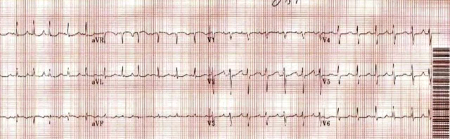 [Figure caption and citation for the preceding image starts]: ECG showing sinus tachycardia during tilt-table testingCheema MA et al. BMJ Case Rep. 2019 Apr 20;12(4):e227789; used with permission [Citation ends].