Investigations
1st investigations to order
blood culture
Test
Take blood for culture within 1 hour of arrival at hospital and ideally prior to giving antibiotics to identify the causative organism and target treatment accordingly.[22]
Taking blood for culture should not delay administration of antibiotics.[15]
Take blood cultures even if antibiotics have been given in the community.[15] In practice, tell the laboratory that the patient has received antibiotics.
The results of blood cultures may be influenced by previous antibiotics.[44]
Result
positive
serum pneumococcal and meningococcal PCR
Test
Polymerase chain reaction (PCR) amplification of bacterial DNA from blood is more sensitive and specific than traditional microbiological techniques. It is useful for:
Aiding diagnosis in patients who have already received antibiotics[46]
Distinguishing bacterial from viral meningitis.
Result
positive for specific antigen
blood glucose
Test
Always request blood glucose, as patients with severe bacterial meningitis often have metabolic abnormalities.
Result
hypoglycaemia or hyperglycaemia
FBC and differential
Test
Always request FBC and differential.
Patients with bacterial meningitis may have a raised white blood cell count, a low red blood cell count, and low platelets.
Patients with rapidly progressive infections may initially have normal WBC.
Result
leukocytosis, anaemia, thrombocytopenia
neutropenia can occur in severe infections.
serum urea, creatinine, and electrolytes
Test
Always request urea, electrolytes, and creatinine.
Patients with severe bacterial meningitis often have metabolic abnormalities.
Result
acidosis, hypokalaemia, hypocalcaemia, hypomagnesaemia
low sodium may indicate tuberculous meningitis
venous blood gas
LFTs
Test
Always request LFTs.
Patients with severe bacterial meningitis often have metabolic abnormalities.
Result
raised
coagulation screen (prothrombin time, INR, activated PTT, fibrinogen, fibrin degradation products)
Test
Always request a coagulation screen as coagulopathy is common in severe infections.
Result
evidence of disseminated intravascular coagulation (prolonged thrombin time, elevated fibrin degradation products or D-dimer, low fibrinogen or antithrombin levels)
serum HIV
serum procalcitonin (PCT)
Test
Measure serum PCT if available as it may be helpful in differentiating bacterial from other inflammatory causes. It cannot determine the site of the infection.[15][23]
Serum procalcitonin: this has both sensitivity and specificity of over 90% when used to distinguish between bacterial and viral meningitis.[52][53]
Do not perform procalcitonin testing without an established, evidence-based protocol.[54]
Although PCT may help differentiate bacterial from other inflammatory causes, evidence does not show a large difference in diagnostic accuracy for bacterial meningitis compared to CRP.[15][22]
Result
elevated or normal
serum CRP
Test
Check serum CRP concentration.[15]
If the cerebrospinal fluid Gram stain is negative and the differential diagnosis is between bacterial and viral meningitis, a normal serum CRP concentration excludes bacterial meningitis with approximately 99% certainty.[51]
In a study of 507 children, a CRP >40 mg/L suggested a bacterial aetiology with a sensitivity of 93% and a specificity of 100%.[23][51]
Result
high
cerebrospinal fluid (CSF) protein
Test
Do a lumbar puncture (LP; unless contraindicated) within 1 hour of arrival at hospital.[15] Perform the lumbar puncture before starting antibiotics, unless it is not safe to do so or it will cause a clinically significant delay to starting antibiotics.[22]
In practice, timing of lumbar puncture is a clinical decision. Seek senior advice if you are unsure. The need for a rapid LP has to be weighed against the desire to start antimicrobial treatment urgently.[15]
Carry out LP even if the patient has started antibiotics, preferably within 4 hours of starting treatment.[15]
The culture rate can drop off rapidly after 4 hours, making it difficult to identify the causative organism (but prompt molecular tests will still identify the causative organism even after antibiotics have been started).
At least 15 mL of CSF is required for investigations.[15][24]
Inform the lab of an urgent CSF sample, which will need confirmation of receipt and urgent processing.
Biochemical measurements can indicate the likely cause of bacterial meningitis, but are not always definitive. All results must be interpreted within the clinical context.
Bacterial meningitis tends to have a higher CSF protein than viral meningitis.
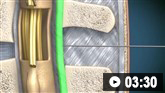
How to perform a diagnostic lumbar puncture in adults. Includes a discussion of patient positioning, choice of needle, and measurement of opening and closing pressure.
Result
CSF protein is usually elevated (>0.5 g/L); opening pressure often elevated (>20 cm)
CSF lactate
Test
Do a lumbar puncture (LP; unless contraindicated) within 1 hour of arrival at hospital.[15] Perform the lumbar puncture before starting antibiotics, unless it is not safe to do so or it will cause a clinically significant delay to starting antibiotics.[22]
In practice, timing of lumbar puncture is a clinical decision. Seek senior advice if you are unsure. The need for a rapid LP has to be weighed against the desire to start antimicrobial treatment urgently.[15]
Carry out LP even if the patient has started antibiotics, preferably within 4 hours of starting treatment.[15]
The culture rate can drop off rapidly after 4 hours, making it difficult to identify the causative organism (but prompt molecular tests will still identify the causative organism even after antibiotics have been started).
At least 15 mL of CSF is required for investigations.[15][24]
Inform the lab of an urgent CSF sample, which will need confirmation of receipt and urgent processing.
Biochemical measurements can indicate the likely cause of bacterial meningitis, but are not always definitive. All results must be interpreted within the clinical context.
How to perform a diagnostic lumbar puncture in adults. Includes a discussion of patient positioning, choice of needle, and measurement of opening and closing pressure.
Evidence: CSF lactate
CSF lactate differentiates bacterial from viral meningitis more accurately than CSF glucose, CSF/plasma glucose ratio, CSF protein, or CSF total number of leukocytes. If measured prior to starting antibiotics, CSF lactate has a high negative predictive value to rule out bacterial meningitis and provides reassurance to stop or withhold antibiotics.
One meta-analysis of 25 studies performed in 16 countries and including 783 patients with bacterial meningitis and 909 patients with viral meningitis found that CSF lactate had excellent accuracy in predicting bacterial meningitis. In a head-to-head meta-analysis of these 25 studies, the diagnostic accuracy of the CSF lactate concentration cut-off of >35 mg/dL was higher than that of CSF glucose, CSF/plasma glucose ratio, CSF protein, or CSF total number of leukocytes.[67]
A second meta-analysis included 33 studies. The pooled test characteristics of CSF lactate were sensitivity 0.93 (95% CI 0.89 to 0.96), specificity 0.96 (95% CI 0.93 to 0.98), likelihood ratio positive 22.9 (95% CI 12.6 to 41.9), likelihood ratio negative 0.07 (95% CI 0.05 to 0.12), and diagnostic odds ratio 313 (95% CI 141 to 698), and suggested a CSF lactate of 35 mg/dL could be the optimal cut-off value for distinguishing bacterial meningitis from aseptic meningitis. The sensitivity of CSF lactate concentration was reduced by about 50% in patients who received antibiotic treatment before lumbar puncture, compared with those not receiving antibiotic pre-treatment.[68]
CSF glucose
Test
Do a lumbar puncture (LP; unless contraindicated) within 1 hour of arrival at hospital.[15] Perform the lumbar puncture before starting antibiotics, unless it is not safe to do so or it will cause a clinically significant delay to starting antibiotics.[22]
In practice, timing of lumbar puncture is a clinical decision. Seek senior advice if you are unsure. The need for a rapid LP has to be weighed against the desire to start antimicrobial treatment urgently.[15]
Carry out LP even if the patient has started antibiotics, preferably within 4 hours of starting treatment.[15]
The culture rate can drop off rapidly after 4 hours, making it difficult to identify the causative organism (but prompt molecular tests will still identify the causative organism even after antibiotics have been started).
At least 15 mL of CSF is required for investigations.[15][24]
Inform the lab of an urgent CSF sample, which will need confirmation of receipt and urgent processing.
Biochemical measurements can indicate the likely cause of bacterial meningitis, but are not always definitive. All results must be interpreted within the clinical context.
How to perform a diagnostic lumbar puncture in adults. Includes a discussion of patient positioning, choice of needle, and measurement of opening and closing pressure.
Use the CSF/plasma glucose ratio if possible, as the CSF concentration varies according to the plasma glucose.[66]
The CSF glucose is low in bacterial meningitis, but the concentration is affected by the concomitant plasma glucose.[66] Therefore, blood glucose should be checked at the same time as the LP to allow interpretation of the CSF glucose. Normally CSF glucose is about two-thirds of the plasma glucose.[15]
Result
CSF glucose concentration is <2.5 mmol/L (<45 mg/dL), or <40% of simultaneously measured serum glucose in bacterial meningitis[16]
CSF microscopy, Gram stain, culture, and sensitivities
Test
Do a lumbar puncture (LP; unless contraindicated) within 1 hour of arrival at hospital.[15] Perform the lumbar puncture before starting antibiotics, unless it is not safe to do so or it will cause a clinically significant delay to starting antibiotics.[22]
In practice, timing of lumbar puncture is a clinical decision. Seek senior advice if you are unsure. The need for a rapid LP has to be weighed against the desire to start antimicrobial treatment urgently.[15]
Carry out LP even if the patient has started antibiotics, preferably within 4 hours of starting treatment.[15]
The culture rate can drop off rapidly after 4 hours, making it difficult to identify the causative organism (but prompt molecular tests will still identify the causative organism even after antibiotics have been started).
At least 15 mL of CSF is required for investigations.[15][24]
Inform the lab of an urgent CSF sample, which will need confirmation of receipt and urgent processing.
In practice, do a lumbar puncture, even if the patient received antibiotics in the community; tell the laboratory that the patient has received prior antibiotics.
How to perform a diagnostic lumbar puncture in adults. Includes a discussion of patient positioning, choice of needle, and measurement of opening and closing pressure.
Gram stain rapidly and accurately identifies the causative bacteria in 60% to 90% of patients with community-acquired meningitis.[61] It has a sensitivity of 50% to 99% and a specificity of 97% to 100%.[15][16] This means that if bacteria are present in the CSF, you can be certain of the diagnosis, but a lack of bacteria on the Gram stain does not exclude the diagnosis of bacterial meningitis.
The likelihood of a positive Gram stain result depends on the specific pathogen: the Gram stain is positive in 90% in cases of pneumococcal meningitis, 70% to 90% in cases of meningococcal meningitis, 50% in cases of Haemophilus influenzae meningitis, and 25% to 35% in Listeria monocytogenes meningitis.[23][62][63]
CSF culture is diagnostic in 70% to 85% of patients.[44] However, even if culture is negative due to antibiotic administration, bacteria may be identifiable in the CSF for up to 48 hours after intravenous antibiotics.[15]
Result
organisms seen on microscopy and cultures evident on culture medium
CSF red and white cell count
Test
Do a lumbar puncture (LP; unless contraindicated) within 1 hour of arrival at hospital.[15] Perform the lumbar puncture before starting antibiotics, unless it is not safe to do so or it will cause a clinically significant delay to starting antibiotics.[22]
In practice, timing of lumbar puncture is a clinical decision. Seek senior advice if you are unsure. The need for a rapid LP has to be weighed against the desire to start antimicrobial treatment urgently.[15]
Carry out LP even if the patient has started antibiotics, preferably within 4 hours of starting treatment.[15]
The culture rate can drop off rapidly after 4 hours, making it difficult to identify the causative organism (but prompt molecular tests will still identify the causative organism even after antibiotics have been started).
At least 15 mL of CSF is required for investigations.[15][24]
Inform the lab of an urgent CSF sample, which will need confirmation of receipt and urgent processing.
Biochemical measurements can indicate the likely cause of bacterial meningitis, but are not always definitive. All results must be interpreted within the clinical context.
How to perform a diagnostic lumbar puncture in adults. Includes a discussion of patient positioning, choice of needle, and measurement of opening and closing pressure.
CSF WBC count can be lower or normal in the early phase of the disease.[15][16][64]
Result
polymorphonuclear pleocytosis with WBC count typically >1.0 × 10⁹/L in untreated bacterial meningitis
CSF polymerase chain reaction (PCR) for pneumococcus
Test
Do a lumbar puncture (LP; unless contraindicated) within 1 hour of arrival at hospital.[15] Perform the lumbar puncture before starting antibiotics, unless it is not safe to do so or it will cause a clinically significant delay to starting antibiotics.[22]
In practice, timing of lumbar puncture is a clinical decision. Seek senior advice if you are unsure. The need for a rapid LP has to be weighed against the desire to start antimicrobial treatment urgently.[15]
Carry out LP even if the patient has started antibiotics, preferably within 4 hours of starting treatment.[15]
The culture rate can drop off rapidly after 4 hours, making it difficult to identify the causative organism (but prompt molecular tests will still identify the causative organism even after antibiotics have been started).
At least 15 mL of CSF is required for investigations.[15][24]
Inform the lab of an urgent CSF sample, which will need confirmation of receipt and urgent processing.
Biochemical measurements can indicate the likely cause of bacterial meningitis, but are not always definitive. All results must be interpreted within the clinical context.
How to perform a diagnostic lumbar puncture in adults. Includes a discussion of patient positioning, choice of needle, and measurement of opening and closing pressure.
PCR amplification of bacterial DNA from CSF is more sensitive and specific than traditional microbiological techniques.
PCR is useful in distinguishing bacterial from viral meningitis.
It is helpful in diagnosing bacterial meningitis in patients who have been pre-treated with antibiotics.[46]
CSF PCR has been reported to have a sensitivity of 79% to 100% for Streptococcus pneumoniae, and 67% to 100% for Haemophilus influenzae.[23][27]
The value of Listeria monocytogenes PCR is currently unclear.[23][27]
About 5% to 26% of cases of meningitis are caused by bacteria other than S pneumoniae, Neisseria meningitidis, or H influenzae and are not routinely detected by PCR.[23][27]
CSF PCR is also used to test for meningococcus, which is not covered in this topic. See Meningococcal disease.[15]
Result
may be positive
Investigations to consider
neuroimaging
Test
Neuroimaging is not indicated unless you suspect alternative pathology because there are signs indicating risk of cerebral herniation.[15]
Do not routinely perform neuroimaging before lumbar puncture.
Only perform cranial imaging before lumbar puncture if there are:[22]
risk factors for an evolving space-occupying lesion or
any of these symptoms or signs, which might indicate raised intracranial pressure:
New focal neurological features (including seizures or posturing)
Abnormal pupillary reactions or papilloedema[15]
A Glasgow Coma Scale (GCS) score of 9 or less, or a progressive and sustained or rapid fall in level of consciousness.
These clinical features indicate a risk of cerebral herniation due to conditions such as brain abscess, subdural empyema, or large cerebral infarction.[23][26][27]
This has been a controversial area.[15][28][29] Delaying LP for a computed tomography (CT) scan can cause delays in antibiotic administration, which can in turn lead to an increase in mortality.[30][31] NICE recommends taking bloods, giving antibiotics and stabilising the patient before imaging.[22]
In practice, most patients will have LP without the need for prior neuroimaging.[15]
Regardless of decisions about pre-LP neuroimaging, delay or do NOT perform LP in the following situations:[15][22][23]
Extensive or rapidly spreading purpura
Infection at the lumbar puncture site
Respiratory or cardiac compromise
Signs of severe sepsis
A coagulopathy
Specific Glasgow Coma Scale (GCS) levels indicating a need to delay lumbar puncture or to obtain cranial imaging have been debated. Seek senior advice if you are uncertain about either of these situations.
CT scan may identify a tumour, brain abscess, or meningitis-associated complications such as brain infarction, generalised cerebral oedema, or hydrocephalus.[16][73]
CT scan will not pick up raised intracranial pressure per se.
In practice, MRI should only be done if pathology is suspected that wasn’t evident on CT scan.
More info: Timing of cranial imaging in relation to lumbar puncture
This has been a controversial area.[28][29] A review of the evidence in 2024 resulted in the National Institute for Health and Care Excellence (NICE) recommending against routinely performing neuroimaging before lumbar puncture.[22]
Delaying lumbar puncture for a CT scan can cause delays in antibiotic administration, which may lead to an increase in mortality.[22][30][31]
Lumbar puncture without prior CT is also associated with lower rates of neurological and/or hearing deficits and functional impairment, and a shorter time to antibiotic treatment (with or without corticosteroids), relative to lumbar puncture after CT.[22]
If neuroimaging shows no signs indicating risk of cerebral herniation, perform a lumbar puncture as soon as possible unless:[15]
An alternative diagnosis is established
The patient has:
Repeated seizures
Deteriorating GCS [ Glasgow Coma Scale Opens in new window ]
Severe cardiac/respiratory compromise
CSF PCR for tuberculosis
Test
In practice, this test is requested only if there is a high clinical suspicion of tuberculous meningitis.
Result
positive
CSF PCR for herpes simplex virus (HSV) 1 and 2 and varicella zoster virus
Test
If you suspect meningitis clinically but CSF, blood culture, and PCR are negative for bacterial pathology, consider checking for viral meningitis.
In the UK, the commonest viral causes of meningitis are enteroviruses and herpes viruses.[15]
Result
positive
CSF, stool, and throat swab PCR for enterovirus
Test
If you suspect meningitis clinically but CSF, blood culture, and PCR are negative for bacterial pathology, consider checking for viral meningitis.
In the UK, the commonest viral causes of meningitis are the enteroviruses and herpes viruses.[15]
Result
positive
Use of this content is subject to our disclaimer